Not Just a Fridge: 10 Reasons a Wine Cooler Is Essential for Every Wine Lover
- Share
- Issue Time
- Jan 21,2026
Summary
Ever wondered if a wine cooler is just a fancy mini-fridge?
Why Your Kitchen Fridge Is Secretly Harming Your Wine
You’ve selected the perfect bottle—a crisp Sauvignon Blanc or a robust Cabernet Sauvignon. You bring it home and place it in the kitchen refrigerator, thinking it’s safe. But here’s a secret the pros know: your standard fridge is one of the worst places to store wine for more than a few days. It's a hostile environment of fluctuating temperatures, damaging vibrations, and low humidity that can alter the very essence of the wine. If you're serious about enjoying wine as the winemaker intended, it's time to understand the crucial differences between a regular refrigerator and a dedicated wine cooler fridge. This isn't just about chilling; it's about preservation.
1. Unwavering Temperature Stability: The #1 Rule of Wine Storage
The single most important factor in wine preservation is temperature stability. Regular refrigerators are designed for food safety, which means they are opened frequently, causing wild temperature swings. These fluctuations force the wine to expand and contract, potentially pushing the cork out and allowing oxygen to seep in, which prematurely ages and spoils the wine.
A wine cooler fridge, on the other hand, is built to maintain a consistent temperature, typically between 45–65°F (7–18°C). This stability is crucial for allowing wine to age gracefully and develop its intended complexity. A scientific study even found that wines stored at room temperature with fluctuations age four times faster than those in a controlled environment.
2. Precision Temperature Control for Different Varietals
Not all wines are created equal, and neither are their storage needs. A standard fridge keeps everything at a chilly 35–42°F (2–6°C), which is far too cold for long-term wine storage and can stunt the development of flavors. A wine cooler offers precise control, allowing you to set the perfect temperature for your collection. Many models are even dual-zone, enabling you to store reds at a slightly warmer temperature (e.g., 55-65°F or 12-18°C) and whites or sparkling wines at a cooler, ready-to-serve temperature (e.g., 45-50°F or 7-10°C) within the same unit.
3. The Importance of Humidity: Protecting the Cork
Your kitchen refrigerator is a low-humidity environment designed to prevent mold on food. This dryness is a direct threat to wine corks. Over time, a dry environment will cause the cork to shrink and become brittle, breaking the seal of the bottle. This allows oxygen to enter and oxidize the wine, rendering it flat and lifeless. Wine coolers are specifically designed to maintain an optimal humidity level of 50-70%, keeping the cork moist, plump, and fully sealed. This simple feature is a non-negotiable for anyone planning to store wine for more than a few weeks.
4. Guarding Against UV Light Damage
Light, especially its invisible UV rays, is a silent enemy of wine. Exposure to light can trigger chemical reactions that break down the delicate organic compounds responsible for a wine's flavor and aroma, a phenomenon known as "lightstrike". This is why wine is traditionally bottled in dark glass. Most wine coolers feature solid or UV-resistant, tempered glass doors that block these harmful rays, keeping your collection in protective darkness while still allowing for a beautiful display. Regular fridges offer no such protection.
5. Eliminating Harmful Vibrations
Standard refrigerators have powerful compressors that cycle on and off, creating constant, subtle vibrations. Over time, these vibrations disturb the fine sediments in aging wines, especially reds. This disturbance can accelerate chemical reactions, dulling flavors and aromas and preventing the wine from maturing properly. Wine coolers use low-vibration compressors, advanced dampening systems, or thermoelectric cooling to create a tranquil environment, allowing your wine to rest undisturbed as it evolves.
Wine Cooler vs. Regular Refrigerator: A Quick Comparison
| Feature | Wine Cooler Fridge | Regular Refrigerator |
|---|---|---|
| Temperature Range | Optimal 45-65°F (7-18°C), often with dual zones | Too cold, ~35-42°F (2-6°C) |
| Temperature Stability | Highly stable, minimal fluctuations | Prone to frequent, large fluctuations |
| Humidity Control | Maintains ideal 50-70% humidity | Low humidity, dries out corks |
| Vibration | Low-vibration technology, virtually silent | Constant compressor vibration |
| UV Protection | UV-resistant glass or solid doors | No protection |
| Air Circulation | Often includes charcoal filters for pure air | Shares air with foods, risking odor absorption |
| Storage Design | Horizontal shelving to keep corks moist | Upright storage, inefficient use of space |
6. Proper Horizontal Storage for Cork Health
A wine cooler is designed with purpose-built shelving that cradles bottles horizontally. This isn't just for space efficiency; it's essential for the wine's health. Storing a bottle on its side ensures the wine is in constant contact with the cork, keeping it moist and preventing it from drying out. Storing bottles upright in a regular refrigerator door is one of the fastest ways to compromise the seal and ruin the wine.
7. An Odor-Free Environment
Wine breathes through its cork, albeit very slowly. If stored in a regular refrigerator alongside leftover garlic pasta, strong cheeses, or other aromatic foods, these odors can permeate the cork and taint the wine. Many premium wine coolers include charcoal filters to purify the internal air, ensuring that the only thing your wine is exposed to is a clean, neutral environment.
8. Enhancing Serving-Readiness and Convenience
Beyond long-term storage, a wine cooler fridge makes you the perfect host. With a dual-zone cooler, your white wines are always perfectly chilled and ready to serve, while your reds are held at a cellar temperature that is much closer to their ideal serving temperature than a cold fridge or a warm room. This means less time waiting for a red to warm up or a white to chill down, and more time enjoying the wine at its absolute best.
9. An Elegant Showcase for Your Collection
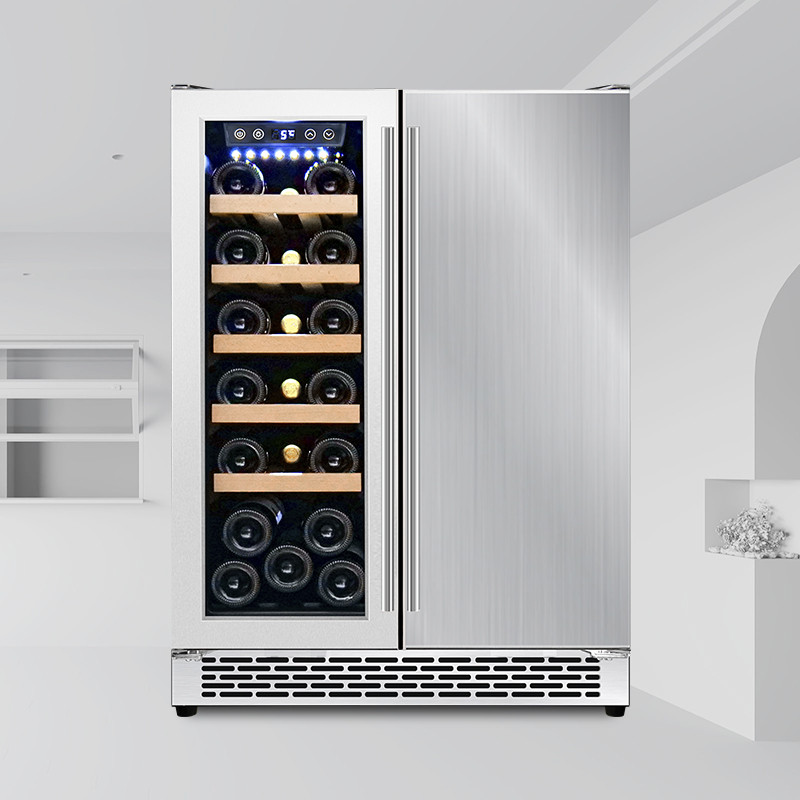
Let's be honest: for many, a wine collection is a source of pride. A beautifully designed wine cooler, with its sleek finish, interior LED lighting (which emits no harmful heat or UV rays), and elegant wooden shelves, turns your collection into a stunning visual centerpiece. It's a statement piece that speaks to your passion for wine, inviting conversation and enhancing the overall experience of sharing a bottle with guests.
10. A Smart Investment for Every Enthusiast
Whether you have three prized bottles or a growing collection of a hundred, a wine cooler fridge is a worthy investment. It protects your financial investment by preventing spoilage and maximizes your sensory investment by ensuring every bottle you open tastes exactly as it should. It eliminates the guesswork and a-Anxiety of improper storage, providing peace of mind and unlocking the full potential of every single glass